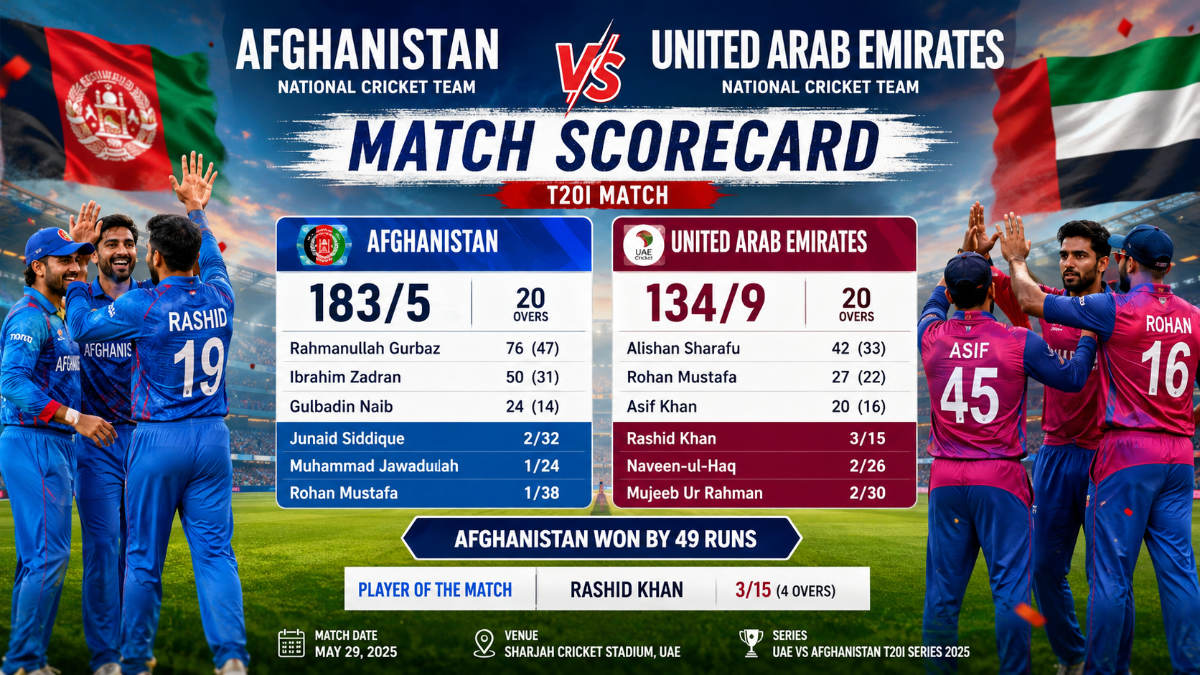
In the Afghanistan National Cricket Team vs United Arab Emirates National Cricket Team match scorecard from ICC Men’s T20 World Cup 2026, Afghanistan beat UAE by 5 wickets (4 balls remaining) at Arun Jaitley Stadium, Delhi, on February 16, 2026. UAE scored 160/9 in 20 overs before Afghanistan chased it down at 162/5 in 19.2 overs. Azmatullah Omarzai won Player of the Match with figures of 4/15 and an unbeaten 40 off 21 balls, becoming only the third player in men’s T20 World Cup history to score 30-plus runs and take a four-wicket haul in the same innings. If you’re searching for the complete Afghanistan National Cricket Team vs United Arab Emirates National Cricket Team match scorecard, batting figures, bowling breakdown, and the tactical story behind a tense low-scoring T20 World Cup encounter, this is the definitive record. What looked like a routine group-stage fixture turned into a defining moment for Afghanistan’s tournament survival, decided almost entirely by one player’s twin contributions with bat and ball.
Match Overview And Context
Afghanistan won this T20 World Cup group-stage clash by 5 wickets, chasing a modest 161-run target with four balls to spare, in a match ultimately defined by bowling discipline rather than batting fireworks.
Group D of the ICC Men’s T20 World Cup 2026 had already produced its share of tight finishes, but this Afghanistan vs UAE fixture carried extra weight. Afghanistan arrived at the Arun Jaitley Stadium in Delhi off the back of two narrow defeats, meaning this was effectively a must-win game to keep any realistic Super Eight qualification hope alive. UAE, by contrast, were chasing their first victory over a full-member nation in the tournament, a target that had eluded them through their opening matches against Pakistan and other higher-ranked sides. The Afghanistan National Cricket Team vs United Arab Emirates National Cricket Team match scorecard tells a story of contrasting fortunes across the two innings-a UAE batting effort that started poorly and finished worse, and an Afghanistan chase that stumbled at the start before being rescued by composed batting through the middle overs and a blistering finish. For neutral fans and fantasy cricket users alike, the numbers behind this contest reward closer inspection.
Key Match Details
- Result: Afghanistan won by 5 wickets (4 balls remaining)
- Venue: Arun Jaitley Stadium, Delhi
- Date: February 16, 2026.
- Toss: Afghanistan won, elected to field first.
- Player of the Match: Azmatullah Omarzai (4/15 & 40*)
- Tournament: ICC Men’s T20 World Cup 2026, Group D, Match 28
| Team | Score | Overs | Result |
| United Arab Emirates | 160/9 | 20.0 | Lost |
| Afghanistan | 162/5 | 19.2 | Won by 5 wickets |
The Toss And Pitch Report
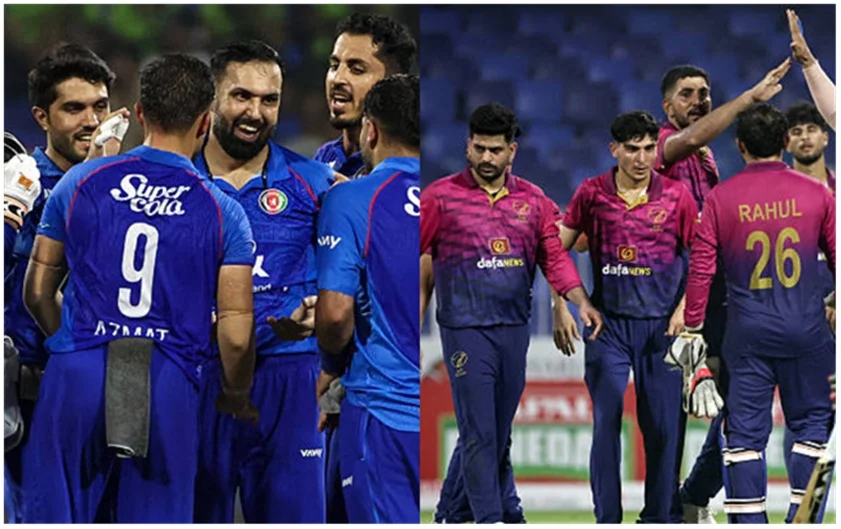
Rashid Khan won the toss and chose to field first, a decision shaped by conditions at the Arun Jaitley Stadium that historically favor chasing teams once the surface slows down under lights. Delhi pitches in February tend to offer more to spinners and hard-length seamers as the match progresses, and this surface was no exception. Omarzai himself described the wicket as “a bit low” after the game, which explained why conventional back-of-a-length bowling struggled to generate consistent bounce, while hard-length deliveries angled into the pitch found awkward variable bounce that troubled batters expecting truer pace. This single tactical read-bowl to the conditions rather than to a generic plan-became the difference between the two sides’ bowling performances across the innings. For context, Delhi as a T20 World Cup venue has developed a reputation for rewarding sides that win the toss and bowl first in day-night fixtures, since dew and cooler evening air can make chasing marginally easier in the second innings. Afghanistan’s decision to field first aligned with this broader pattern, even though their own bowlers took time to adjust to the surface.
United Arab Emirates Innings: Full Batting Scorecard And Breakdown
UAE posted 160/9 in their 20 overs, recovering from an early collapse thanks to a determined middle-order rebuild before losing all momentum in the closing stages. UAE’s innings could not have started worse. Aryansh Sharma was dismissed for a duck off the fourth ball of the innings, and captain Muhammad Waseem followed inside the second over, leaving the total at a precarious 13 for 2. Against a side chasing its first win of the tournament, this start threatened to derail the innings entirely before it had even begun. Alishan Sharafu and Sohaib Khan came together and rebuilt through calculated aggression rather than pure survival, adding a partnership that carried UAE from 13/2 to 97/3 by the 11th over. Sharafu’s 40 off 31 balls provided the platform, but it was Sohaib Khan’s innings that ultimately defined UAE’s total.
Read More: Sri Lanka National Cricket Team vs Oman National Cricket Team Match Scorecard
UAE Batting Card
| Batter | Dismissal | Runs | Balls | 4s | 6s |
| Aryansh Sharma (wk) | out, 0.4 overs | 0 | 1 | 0 | 0 |
| Muhammad Waseem (c) | out, 1.6 overs | 10 | 6 | 2 | 0 |
| Alishan Sharafu | out, 11.2 overs | 40 | 31 | 3 | 2 |
| Sohaib Khan | – | 68 | 48 | 6 | 4 |
| Syed Haider | out, 14.2 overs | 13 | 10 | 1 | 1 |
| Harshit Kaushik | – | 0 | – | 0 | 0 |
| Muhammad Arfan | – | 0 | – | 0 | 0 |
| Haider Ali | – | 13 | 12 | 2 | 0 |
| Simranjeet Singh | not out | 3 | – | – | – |
| Junaid Siddique | not out | 3 | – | – | – |
| Total | 160/9 | 20.0 overs |
Sohaib Khan‘s 68 off 48 balls at a strike rate of over 141 was, by a wide margin, the most important individual contribution of the entire match on either side, and it stands as the highest individual score recorded in this fixture. His innings combined calculated boundary hitting with strike rotation, keeping UAE’s run rate healthy through overs that could easily have stagnated after the early setbacks.
Why UAE Fell Short In The Death Overs
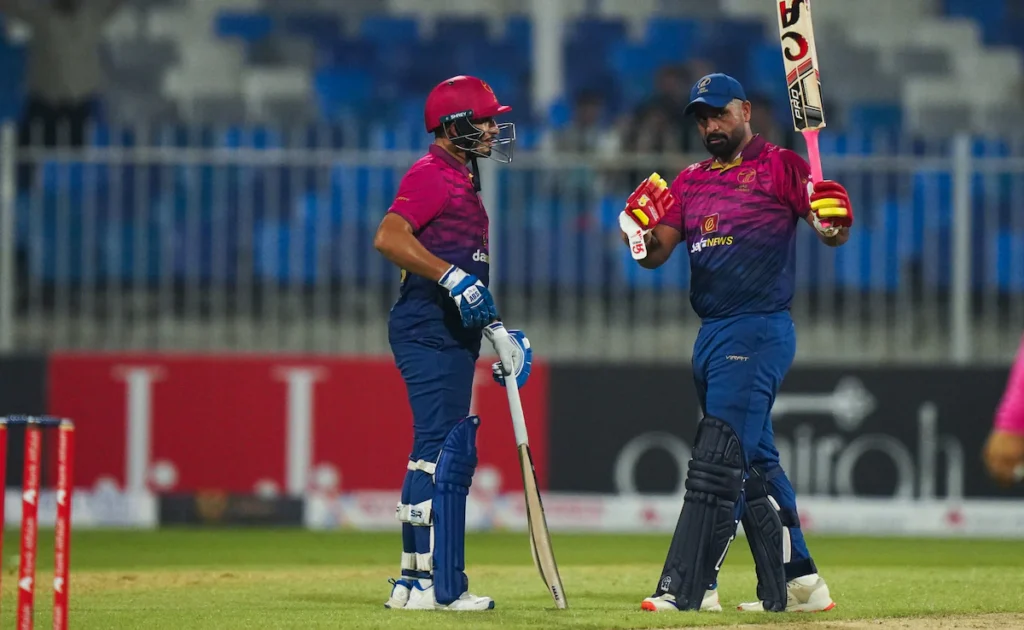
The single most damaging phase of UAE’s innings arrived after Sohaib Khan’s dismissal in the 18th over. From that point, UAE managed just eight runs off the final 15 deliveries, a collapse in momentum that converted a potentially defendable total into a below-par one. This is the kind of detail that a standard match report often glosses over, yet it is the single biggest factor explaining the eventual margin of the result. Captain Muhammad Waseem was direct in his post-match assessment, stating his side finished roughly “15 runs short” of a genuinely competitive total. He attributed this shortfall to two or three additional boundary balls conceded during the innings and the loss of key batters at costly moments-essentially, a death-overs execution failure rather than a batting-quality problem. This admission from the UAE captain matters because it reframes the entire chase: Afghanistan were not chasing a strong total, they were chasing a total that UAE themselves acknowledged fell short of its potential.
Afghanistan Bowling Performance: The Omarzai Factor
Azmatullah Omarzai’s 4/15 from four overs was the single biggest factor behind UAE’s below-par total, exploiting a slow, low Delhi pitch with disciplined hard-length bowling. While Afghanistan’s overall bowling figures across the innings were unremarkable outside of Omarzai’s spell, his individual impact cannot be overstated. He deliberately targeted a hard length on a surface he identified as offering extra, uneven bounce-a tactical decision made mid-match rather than part of a pre-set plan, since Afghanistan’s captain later admitted the bowling unit “didn’t bowl as good as we should have” through the first ten overs.
Afghanistan Bowling Card
| Bowler | Overs | Runs | Wickets | Economy |
| Azmatullah Omarzai | 4.0 | 15 | 4 | 3.75 |
| Mujeeb Ur Rahman | 4.0 | 31 | 2 | 7.75 |
| Rashid Khan | – | – | 1 | – |
| Noor Ahmad | – | – | 0 | – |
| Ziaur Rahman Sharifi | – | – | 0 | – |
Omarzai’s economy rate of 3.75 stands in sharp contrast to every other bowler used in the innings, none of whom finished below 7.5 runs per over. This gap illustrates exactly how isolated his impact was-Afghanistan effectively won the bowling contest through one player’s four overs rather than a collective team performance, a nuance that matters enormously for anyone analyzing this Afghanistan vs UAE cricket scorecard for tactical insight rather than surface-level results.
Afghanistan Innings: Full Batting Scorecard And Chase Analysis
Afghanistan chased down 161 despite losing an early wicket, with Ibrahim Zadran’s steady 53 and Omarzai’s explosive 40* off 21 balls guiding the team home with four balls in hand. The chase began about as poorly as possible. Rahmanullah Gurbaz was dismissed off the fourth ball of the innings for a duck, caught by Sohaib Khan off the bowling of Junaid Siddique. For a side already under pressure to win, an instant setback like this could easily have compounded the tension, but Ibrahim Zadran’s response set the tone for the rest of the innings. Zadran built a composed 53 off 41 balls, absorbing early pressure and rotating strike efficiently while finding boundaries at regular intervals-six fours and a six across his innings. He anchored partnerships with Gulbadin Naib, Sediqullah Atal, and Darwish Rasooli in succession, ensuring Afghanistan never fell dramatically behind the required run rate even as batters were dismissed at the other end.
Afghanistan Batting Card
| Batter | Dismissal | Runs | Balls | 4s | 6s | Strike Rate |
| Rahmanullah Gurbaz (wk) | c Sohaib Khan b Junaid Siddique | 0 | 2 | 0 | 0 | 0.00 |
| Ibrahim Zadran | c Muhammad Waseem b Muhammad Arfan | 53 | 41 | 6 | 1 | 129.27 |
| Gulbadin Naib | c Harshit Kaushik b Muhammad Arfan | 13 | 12 | 1 | 1 | 108.33 |
| Sediqullah Atal | b Muhammad Jawadullah | 16 | 14 | 1 | 1 | 114.29 |
| Darwish Rasooli | b Junaid Siddique | 33 | 23 | 3 | 1 | 143.48 |
| Azmatullah Omarzai | not out | 40 | 21 | 2 | 3 | 190.48 |
| Mohammad Nabi | not out | 3 | 3 | 0 | 0 | 100.00 |
| Total | 162/5 | 19.2 overs | RR: 8.38 |
After Zadran’s dismissal in the 15th over with Afghanistan on 97, the match still had genuine tension-a required rate that was manageable but not comfortable, especially given how UAE had clawed back into contention with a wicket. Darwish Rasooli’s brisk 33 off 23 balls provided exactly the kind of momentum Afghanistan needed at that stage, striking three fours and a six to keep the scoreboard moving.
The Finishing Act: Omarzai’s Unbeaten 40
When Rasooli fell in the 18th over with Afghanistan on 140, the match was still not entirely settled-UAE needed just two or three more wickets to open the door to an unlikely defense. Instead, Azmatullah Omarzai walked in and ended any doubt within a handful of deliveries, striking two fours and three sixes in an unbeaten 21-ball 40 that finished the match with four balls to spare. This finishing burst is what elevated Omarzai’s overall performance from merely useful to genuinely historic. Combined with his earlier bowling figures, his all-round contribution made him the standout individual across both innings, and it is the primary reason his name appears at the top of every statistical summary of this Afghanistan National Cricket Team vs United Arab Emirates National Cricket Team match scorecard.
Key Partnerships That Decided The Match
- Zadran-Naib (40 runs): Steadied Afghanistan’s innings after the early Gurbaz setback, absorbing the first real pressure of the chase.
- Zadran-Atal (30 runs): Maintained control through the middle overs without taking unnecessary risks against UAE’s spin options.
- Zadran-Rasooli (27 runs): Bridged the gap between the anchor role and the acceleration phase before Zadran’s dismissal.
- Rasooli-Omarzai (43 runs): The single most decisive partnership of the match, effectively sealing the chase in Afghanistan’s favor.
Tactical Analysis: Captaincy, Conditions And Momentum Shifts
Rashid Khan’s decision to bowl first exploited a pitch that slowed considerably as the match progressed, though Afghanistan’s bowling unit struggled through the first ten overs before Omarzai’s mid-innings intervention changed everything. This match offers a useful case study in how T20 tactics evolve mid-game rather than being fixed at the toss. Rashid Khan’s captaincy decision to field first was conditions-based rather than purely instinctive, betting on the surface offering more as the match wore on. That bet only paid off because one bowler adapted his length specifically to the conditions he encountered, rather than sticking to a standard game plan. UAE’s final three overs, when their scoring rate collapsed from a healthy pace to almost a standstill. This single collapse phase is what converted a total that looked competitive at the 17-over mark into one that Afghanistan’s batting order-even after an early wicket-could chase down without needing to take excessive risks throughout the middle overs.
Pitch And Venue Factors
The Arun Jaitley Stadium surface played low and occasionally two-paced across this fixture, a characteristic that rewarded hard-length bowling over more traditional yorkers or short-ball tactics. This single conditions-based detail explains why Omarzai’s specific approach worked while other bowlers on both sides-using fuller lengths or standard back-of-a-length deliveries-found comparatively little success. Understanding this pitch behavior is essential context for anyone using this match as a reference point for future Afghanistan or UAE fixtures at the same venue.
Key Statistical Highlights From The Match
- Omarzai became only the third player in men’s T20 World Cup history to score 30-plus runs and take four wickets in the same match, joining an extremely short list of genuine all-round match-winners at this level.
- UAE scored just eight runs from their final 15 balls, the single costliest passage of play in the entire match.
- Afghanistan recovered from an early setback in their chase-losing Gurbaz for a duck off the fourth ball-to win comfortably with overs in hand.
- Sohaib Khan’s 68 was the highest individual score recorded by either side in this fixture.
- The Rasooli-Omarzai stand of 43 was the highest partnership on either side and the decisive stretch of the chase.
- Omarzai’s bowling economy of 3.75 was less than half that of every other bowler used in the innings.
What This Result Means For Group D Standings
This victory marked Afghanistan’s first win of the tournament, keeping a narrow Super Eight qualification chance alive, while UAE’s defeat extended a difficult campaign without a win over a full-member nation. Coming after two earlier close losses in the group stage, this win was less about statement-making and more about survival for Afghanistan. Rashid Khan was candid in tempering expectations after the game, indicating his side simply wants to continue playing their natural brand of cricket regardless of how the group stage ultimately concludes. For UAE, the result compounded a tournament in which promising individual performances-Sohaib Khan’s batting and Junaid Siddique’s bowling among them-were not enough to translate into results against stronger opposition. The broader context matters here too. Group D produced some of the tightest margins of the tournament’s opening rounds, and results like this one, decided by a handful of runs in the death overs, often end up mattering significantly when net run rate becomes a factor in final qualification scenarios.
Player Spotlight: Azmatullah Omarzai’s Growing Reputation
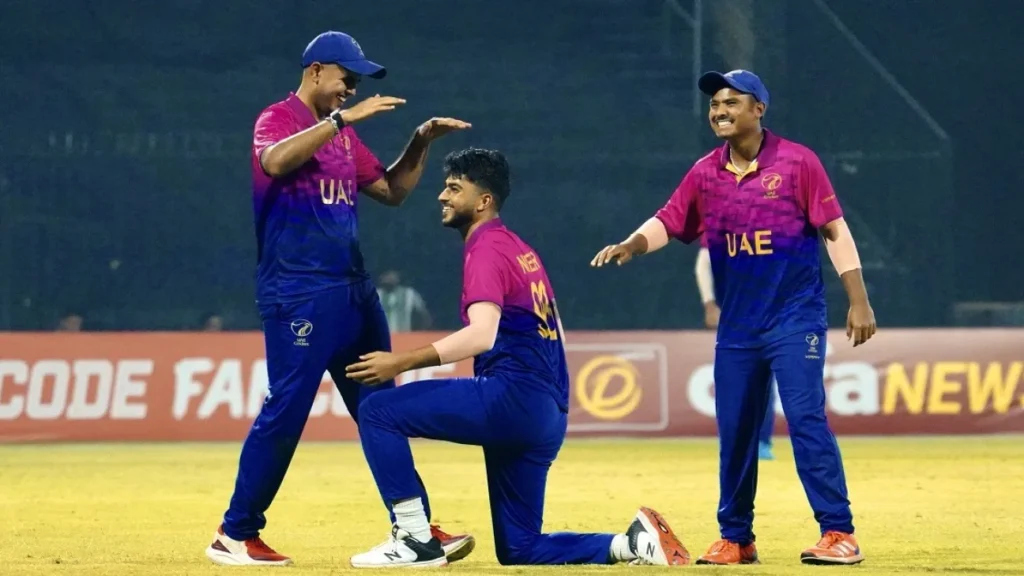
Azmatullah Omarzai has steadily built a reputation as one of Afghanistan’s most reliable all-round match-winners in T20 cricket, and this performance reinforces that trajectory. His ability to contribute meaningfully with both bat and ball in the same match-rather than being purely a specialist in one discipline-gives Afghanistan’s team management genuine tactical flexibility, allowing them to bat him lower in the order as a finisher while also trusting him with the ball during crucial phases of an opposition innings. Performances like this one, against a UAE side that had shown genuine competitiveness earlier in the tournament, add real weight to his growing profile heading into the tournament’s business end.
Frequently Asked Questions:
Who won the Afghanistan vs UAE match scorecard fixture?
Afghanistan won by 5 wickets, chasing 161 in 19.2 overs at the Arun Jaitley Stadium, Delhi.
Who was named Player of the Match in the Afghanistan National Cricket Team vs United Arab Emirates National Cricket Team match scorecard?
Azmatullah Omarzai, for his all-round performance of 4/15 with the ball and an unbeaten 40 off 21 balls with the bat.
What was the final score in the UAE innings?
UAE finished on 160/9 in their allotted 20 overs, built around Sohaib Khan’s 68 and Alishan Sharafu’s 40.
What was Afghanistan’s final chase total?
Afghanistan finished on 162/5 in 19.2 overs, winning with four balls remaining.
Where was this match played?
The match was played at the Arun Jaitley Stadium in Delhi as part of ICC Men’s T20 World Cup 2026 Group D fixtures.
Who scored the highest individual total in the match?
Sohaib Khan of UAE top-scored with 68 runs off 48 balls, the highest score by either side.
What was the highest partnership of the match?
The 43-run stand between Darwish Rasooli and Azmatullah Omarzai for Afghanistan’s fifth wicket proved decisive.
Why did UAE fall short despite a solid middle-order recovery?
UAE managed only eight runs off their final 15 balls, a death-overs collapse that their own captain admitted cost them roughly 15 runs.
Did Afghanistan qualify for the Super Eights after this win?
This win kept Afghanistan’s qualification hopes alive but did not guarantee progression, since qualification also depended on other group results and net run rate.
What record did Azmatullah Omarzai set in this match?
He became only the third player in men’s T20 World Cup history to combine a score of 30-plus runs with a four-wicket haul in the same match.
Why did Afghanistan choose to bowl first after winning the toss?
Rashid Khan’s decision was based on conditions at Delhi’s Arun Jaitley Stadium, where surfaces typically assist chasing teams as the pitch slows down through the course of a match.