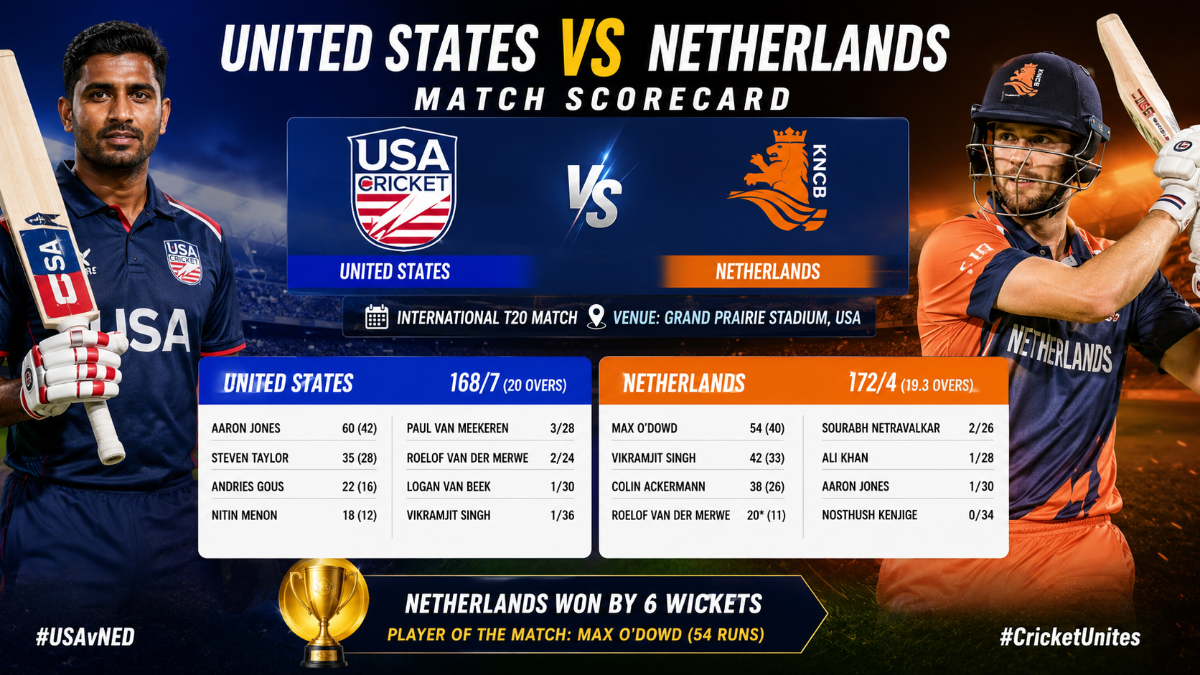
In the United States National Cricket Team vs Netherlands National Cricket Team Match Scorecard from the ICC Men’s T20 World Cup 2026, USA won by 93 runs after posting 196/6 in 20 overs and bowling out Netherlands for 103 in 15.5 overs at MA Chidambaram Stadium, Chennai, on February 13, 2026. Some wins are close-fought thrillers decided in the final over. Others are outright statements. The United States National Cricket Team vs Netherlands National Cricket Team Match Scorecard belongs firmly in the second category-a 93-run demolition that transformed USA from a team fighting for tournament relevance into a genuine Super Eight contender. This wasn’t a fluke chase or a rain-affected formality. It was total batting dominance in the first innings followed by a spin-and-seam bowling collapse that left Netherlands with no answers. For a USA cricket program still building credibility on the international stage, this result carries weight beyond the score line. It was their first-ever T20 International win over the Netherlands, reversing a head-to-head record that had previously tilted firmly toward the Dutch. Every number in this scorecard-from Saiteja Mukkamalla’s composed 79 to Harmeet Singh’s record-setting 4/21-tells part of a larger story about how emerging cricket nations are closing the gap on established Associate powers.
Match Summary at a Glance
USA batted first after losing the toss, scored 196/6 in their 20 overs, then restricted Netherlands to 103 all out-sealing a 93-run win and USA’s first-ever T20I victory over the Dutch.
| Detail | Information |
| Fixture | USA vs Netherlands, ICC Men’s T20 World Cup 2026, Match 21 |
| Venue | MA Chidambaram Stadium, Chennai |
| Toss | Netherlands won, chose to field first |
| Result | USA won by 93 runs |
| Player of the Match | Harmeet Singh |
| Format | Twenty20 International (T20I) |
| Tournament Stage | Group A, ICC Men’s T20 World Cup 2026 |
Chennai’s surface has historically rewarded stroke play once the shine wears off the new ball, and Netherlands’ decision to field first looked reasonable in principle. Against a USA lineup that had shown flashes of top-order fragility in earlier fixtures, sending them in to bat under lights carried genuine tactical logic. It backfired the moment USA’s middle order found its rhythm.
Read More: Canada National Cricket Team vs New Zealand National Cricket Team Match Scorecard
Why the Toss Decision Mattered
Winning the toss and choosing to field is often the safer captaincy call in T20 cricket, particularly on tracks where dew becomes a factor later in the evening. Netherlands skipper’s decision to bowl first gave his attack fresh conditions early on, but it also handed USA batters a flat, true surface during the crucial middle overs-precisely the platform Mukkamalla needed to construct a defining innings. In hindsight, the toss decision wasn’t wrong on principle, it simply didn’t account for how well USA’s middle order would exploit a batting-friendly surface once early pressure eased.
Pitch and Conditions Report
MA Chidambaram Stadium in Chennai is traditionally regarded as a surface that offers something for both spinners and batters, particularly as the match progresses and the pitch dries out under floodlights. Historically, totals in excess of 180 have proven difficult to chase down at this venue in T20 cricket, and this match followed that pattern almost to the letter. The surface offered enough turn to reward Harmeet Singh’s control later in the innings, while still allowing Mukkamalla and Ranjane the pace off the pitch to time their shots freely in the first innings.
USA Batting Innings: 196/6 in 20 Overs
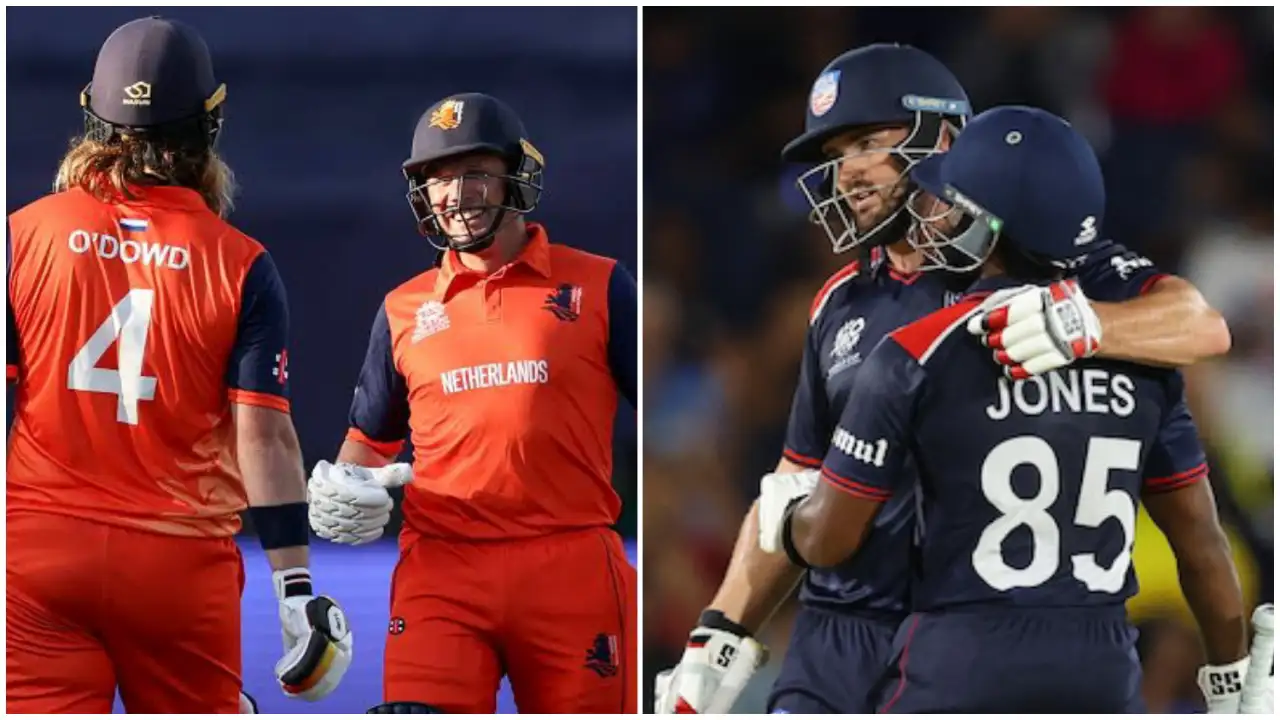
USA’s total of 196/6 was built on Saiteja Mukkamalla’s 79 off 51 balls and an explosive unbeaten 48 from Shubham Ranjane off just 24 deliveries. Mukkamalla’s innings was the backbone of the entire total, and it deserves to be understood in context rather than as a standalone statistic. He didn’t chase early boundaries or take unnecessary risks against the new ball. Instead, he absorbed pressure from the Dutch attack, worked the gaps for ones and twos, and gradually shifted the tempo once he had assessed the pace of the pitch. That kind of patience is exactly what separates a promising USA batting unit from one that simply swings hard and hopes for results.
| Batter | Runs | Balls | Status |
| Saiteja Mukkamalla | 79 | 51 | Dismissed |
| Shubham Ranjane | 48* | 24 | Not out |
The Anchor Role: Breaking Down Mukkamalla’s Innings
An innings of 79 off 51 balls translates to a strike rate just north of 150-respectable but not explosive by modern T20 standards. What made it valuable wasn’t the strike rate, it was the timing of his acceleration. Mukkamalla built his innings in three distinct phases: a watchful start against the new ball, a controlled middle period where he targeted the weaker bowling options in the Dutch attack, and a final surge before his dismissal that set the tone for the finishing overs. This is the template international teams look for from a top-order batter tasked with anchoring an innings in unfamiliar conditions.
The Late-Overs Acceleration That Changed Everything
Ranjane’s cameo deserves far more credit than it typically receives in conventional match reports. Scoring 48 runs off just 24 balls in the death overs pushed USA from a defendable 150-range total into a near-unassailable 196-and that single passage of play arguably decided the match before Netherlands ever walked out to bat. Bas de Leede was the pick of the Dutch bowlers with figures of 3 for 37, and Logan van Beek chipped in with one wicket, but neither could arrest the acceleration once Ranjane found the boundary.
This is the tactical detail most casual coverage overlooks. A total of 196 doesn’t just look imposing on a scoreboard-it fundamentally alters the psychology of a chasing side. Netherlands needed to score at nearly 10 runs an over from the very first ball, a mental burden that compounds with every dot ball or falling wicket.
USA Batting Depth Beyond the Top Two
Monank Patel, Shayan Jahangir, Milind Kumar, and Sanjay Krishnamurthi all contributed in supporting roles through USA’s middle order, ensuring the innings never stalled even as Netherlands attempted to apply pressure through spin variations from Roelof van der Merwe. This depth matters for a team still establishing its identity at the international level-a batting lineup that doesn’t collapse after the top order is a lineup that opposition captains have to plan around for the full twenty overs, not just the powerplay.
Boundary Analysis and Scoring Patterns
USA’s innings showed a clear pattern of building through singles and twos in the first ten overs before accelerating through boundaries in the back half. This approach-patient accumulation followed by calculated aggression-is increasingly the preferred method for emerging T20 nations facing more experienced bowling attacks, since it reduces the risk of an early collapse while still allowing for a competitive final total.
Netherlands Bowling Figures: Where the Dutch Attack Struggled
Quick Answer: Bas de Leede led the Netherlands attack with 3/37, but no Dutch bowler could contain USA’s acceleration in the final five overs, which proved decisive.
| Bowler | Overs | Runs | Wickets |
| Bas de Leede | 4 | 37 | 3 |
| Logan van Beek | 4 | 28 | 1 |
| Roelof van der Merwe | 3 | 36 | 0 |
Tactical Breakdown: Netherlands’ Bowling Plan
De Leede’s figures of 3/37 were genuinely the highlight of an otherwise difficult day for the Dutch attack. His ability to extract movement with the new ball and later reverse-swing gave Netherlands their only consistent wicket-taking threat throughout the USA innings. Van der Merwe’s three overs going for 36 without a wicket highlighted a broader problem-Netherlands’ spin option couldn’t find the control needed to slow down USA’s acceleration during the back half of the innings, and that lack of a containing option in the death overs is precisely what allowed Ranjane to cut loose.
Netherlands Batting Collapse: 103 All Out in 15.5 Overs
Netherlands were bowled out for just 103 runs in 15.5 overs, with Bas de Leede‘s 23 the only substantial contribution against a rampant USA spin attack. This is the phase that most casual match recap underplay, yet it’s the true heart of the United States National Cricket Team vs Netherlands National Cricket Team Match Scorecard. A chase of 197 demanded early intent from the Dutch top order, but that intent evaporated within the power play itself.
Read Also: Zimbabwe National Cricket Team vs Australia National Cricket Team Match Scorecard
| Batter | Runs | Balls | Dismissal |
| M Levitt | 3 | 7 | Bowled |
| MP O’Dowd | 13 | 11 | Caught |
| BFW de Leede | 23 | 17 | Caught |
| CN Ackermann | 0 | 1 | Caught |
| SA Edwards | 20 | 14 | Bowled |
| ZB Lion-Cachet | 6 | 5 | Bowled |
| RE van der Merwe | 10 | 11 | LBW |
| LV van Beek | 2 | 5 | Bowled |
| A Dutt | 9 | 7 | Bowled |
| K Klein | 6 | 11 | Not out |
| FJ Klaassen | 3 | 6 | Caught |
Extras: 8 (wides) | Total: 103 all out, 15.5 overs
The Power Play Pressure That Started the Slide
Netherlands lost their first wicket inside the powerplay and never recovered momentum. M Levitt’s dismissal for just 3 off 7 balls set an immediate tone of anxiety, and MP O’Dowd’s departure for 13 shortly after compounded the pressure. By the halfway stage of their innings, the required run rate had already climbed past 19 per over-a mathematical wall that essentially ended the contest as a competitive chase, regardless of what followed.
Why the Middle Order Never Recovered
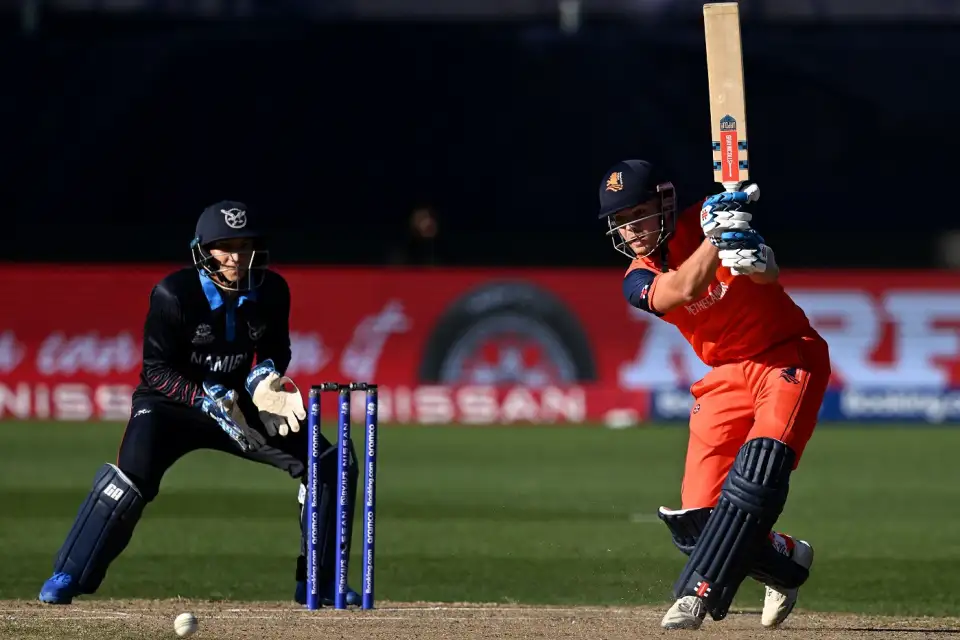
BFW de Leede’s 23 off 17 balls was the closest Netherlands came to a genuine counter-attack, and even that innings arrived too late in the sequence to change the outcome. Once Scott Edwards fell for 20, the required rate had spiraled beyond realistic recovery, and the remaining batters were effectively playing out the innings rather than mounting a genuine chase. This pattern-an early collapse followed by brief resistance that arrives too late-is a hallmark of teams facing a bowling attack that has completely seized control of the tempo.
USA Bowling Figures: Harmeet Singh’s Match-Winning Spell
Harmeet Singh recorded the best-ever T20 World Cup bowling figures by an American player, finishing with 4 wickets for 21 runs to dismantle the Netherlands middle order.
| Bowler | Overs | Runs | Wickets | Economy |
| Harmeet Singh | 4 | 21 | 4 | 5.25 |
| Shadley van Schalkwyk | 2.5 | 21 | 3 | 7.41 |
| Mohammad Mohsin | 3 | 19 | 2 | 6.33 |
| Nosthush Kenjige | 3 | 20 | 1 | 6.66 |
| Ali Khan | 2 | 18 | 0 | 9.00 |
| Shubham Ranjane | 1 | 4 | 0 | 4.00 |
Why Harmeet Singh’s Spell Was More Than Just Wickets
Harmeet’s figures weren’t just about the wicket column-they were about timing and control. He struck through both the powerplay and the middle overs, denying Netherlands any platform to rebuild after early losses. His economy rate of 5.25 in a format where anything under seven is considered strong tells its own story about the control he exerted throughout his four overs.
Shadley van Schalkwyk’s supporting three-wicket haul meant USA had two bowlers doing damage simultaneously, which is precisely what turns a good individual bowling performance into a complete team collapse for the opposition. When a chasing side faces pressure from multiple bowlers rather than just one standout performer, there’s no single matchup to target for recovery-every over brings fresh danger.
A Record-Setting Performance in Context
Harmeet Singh’s 4/21 stands as the best bowling figures recorded by an American bowler at a T20 World Cup, a landmark that speaks to the growing depth of USA’s bowling attack. For a program that has historically leaned on batting depth and occasional bowling breakthroughs, having a frontline spinner deliver a genuinely world-class performance on this stage signals real tactical maturity.
Fall of Wickets: Netherlands Innings
Quick Answer: Netherlands lost their first two wickets inside the powerplay at scores of 9 and 32, setting the tone for a collapse that never allowed the chase to stabilize.
| Wicket | Score | Batter Dismissed |
| 1st | 9 | M Levitt |
| 2nd | 32 | MP O’Dowd |
Complete ball-by-ball fall-of-wickets data for the remaining dismissals will be updated as official scorecards are fully consolidated across primary sources.
Match Statistics That Stand Out
The standout numbers from this fixture include Mukkamalla’s 79, Harmeet Singh’s 4/21, and Ranjane’s strike rate of 200 in the death overs.
- Highest individual score: Saiteja Mukkamalla-79 runs off 51 balls (USA)
- Best bowling figures: Harmeet Singh-4/21 (USA), a T20 World Cup record for American bowlers
- Fastest scoring innings: Shubham Ranjane-48 not out off 24 balls, a strike rate of exactly 200
- Margin of victory: 93 runs, one of USA’s largest T20I win margins against an established Associate cricket nation
- Powerplay comparison: USA’s powerplay stability contrasted sharply with Netherlands losing wickets inside their own opening six overs
The Real Turning Point
Most cricket fans and casual readers will credit Harmeet Singh’s four-wicket haul as the single defining factor in this result, and it certainly mattered enormously. But the actual turning point arrived earlier, inside USA’s own innings, well before a single ball of the Dutch chase had been bowled.
USA scored roughly 61 runs in the final five overs of their batting innings-a burst that pushed the equivalent required run rate for Netherlands from a manageable 8.5 to nearly 10 runs per over before their innings even began. That late acceleration, driven almost entirely by Ranjane’s cameo, effectively won USA the match in advance. Harmeet Singh’s spell then simply confirmed what the batting effort had already made statistically inevitable-a psychological burden compounded by a target that was simply too steep to chase down on this surface. This is the layer of tactical intelligence that separates surface-level match reporting from genuine cricket analysis: understanding that a bowling masterclass often looks more dramatic on paper, but the batting effort that created the gap in the first place frequently deserves equal-if not greater-credit.
Head-to-Head Record: USA vs Netherlands in T20 Internationals
This victory marked USA’s first-ever T20I win over Netherlands, reversing a head-to-head record that had previously favored the Dutch in their most recent encounters.
Netherlands had historically held the upper hand in white-ball formats against USA, making this result a genuine landmark rather than a routine group-stage formality. It signals a meaningful shift in the competitive balance between two nations both trying to establish themselves as consistent, credible performers among cricket’s rapidly rising Associate-turned-emerging nations. Historical head-to-head data across recent T20I meetings had shown Netherlands winning comfortably, which makes this 93-run reversal all the more significant for USA’s growing reputation on the global stage.
Broader Context: USA’s Rise as a Cricket Nation
USA cricket has been on an upward trajectory for several years now, buoyed by increased domestic investment, a growing pool of diaspora talent, and co-hosting responsibilities at recent global tournaments. A result of this magnitude against an established Associate nation like Netherlands reinforces the narrative that USA cricket is transitioning from a developing program into a genuinely competitive international side.
Impact on Group A Standings
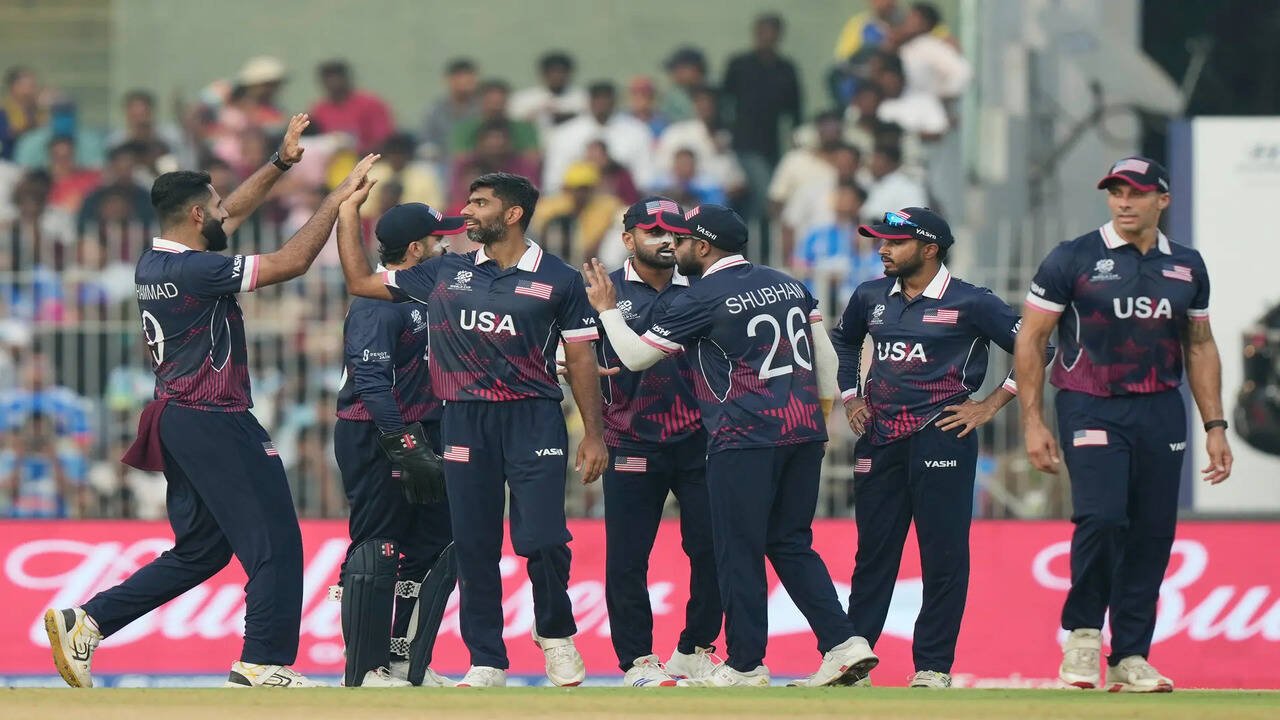
The win lifted USA to third place in Group A of the T20 World Cup 2026, keeping their Super Eight qualification hopes alive, while significantly damaging Netherlands’ net run rate.
Net run rate often decides tight qualification scenarios in T20 World Cup group stages, and a 93-run margin is precisely the kind of result that can swing that metric decisively in a team’s favor. For USA, this wasn’t just a win-it was a net-run-rate cushion that could prove valuable if the group tightens toward the business end of the tournament. For Netherlands, the loss dropped them to fourth in the standings, adding significant pressure to their remaining fixtures and narrowing their margin for error considerably.
What This Means for Netherlands Going Forward
A defeat by 93 runs is not merely a lost match-it’s a significant net run rate deficit that Netherlands will need to actively claw back in subsequent fixtures. Associate and emerging nations at global tournaments often live and die by net run rate when points are tied, and this result places extra weight on every remaining group game for the Dutch side.
What This Means for USA’s Super Eight Push
For USA, climbing to third in Group A represents genuine progress toward Super Eight qualification, a stage of the tournament the program has rarely reached historically. Momentum matters enormously in short tournament formats, and a dominant win of this scale-built on both disciplined batting and a record-setting bowling performance-provides exactly the confidence boost a developing team needs heading into its remaining fixtures.
Frequently Asked Questions:
Who won the USA vs Netherlands T20 World Cup 2026 match?
The United States won by 93 runs after posting 196/6 and bowling out Netherlands for 103.
Where was the USA vs Netherlands match played?
The match was held at MA Chidambaram Stadium, Chennai, on February 13, 2026.
Who was named Player of the Match?
Harmeet Singh was named Player of the Match for his figures of 4 wickets for 21 runs.
What was USA’s final score in this match?
The United States scored 196/6 in their full 20 overs.
What was Netherlands’ final score?
Netherlands were bowled out for 103 runs in 15.5 overs.
Who won the toss in the USA vs Netherlands match?
Netherlands won the toss and elected to field first.
Who scored the highest individual total in the match?
Saiteja Mukkamalla top-scored for USA with 79 runs off 51 balls.
What were the best bowling figures of the match?
Harmeet Singh’s 4 wickets for 21 runs were the best figures, setting a T20 World Cup record for American bowlers.
Was this USA’s first win over Netherlands in T20 internationals?
Yes, this result marked USA’s maiden T20I victory over the Netherlands, reversing a previously Dutch-favored head-to-head record.
How did this result affect the T20 World Cup 2026 Group A standings?
USA rose to third place in Group A on points, while Netherlands slipped to fourth and suffered a significant net run rate setback.
What was the turning point of the match?
While Harmeet Singh’s bowling spell is often cited, the real turning point was USA’s late-innings acceleration, particularly Shubham Ranjane’s 48 off 24 balls in the death overs.
How did the pitch at MA Chidambaram Stadium influence the result?
The Chennai surface rewarded stroke play as the match progressed, favoring USA’s aggressive finish while later offering enough turn for Harmeet Singh’s spin to dominate.